Author: Nathan Duckworth

  • Take the A Seat

    Some of the ‘shinkaisoku’ special rapid services between Himeji (Aboshi) and the Osaka/Kyoto area have ‘A-seat’ carriages. The seats in this carriage recline and have tables. The atmosphere is more like a long-distance express train than a commuter service. The seats have to be reserved (a flat fee of 840 yen), though, and can’t be bought on the train. The A-seat carriage is normally carriage 9 (it’s a different colour to the other carriages).

    If you don’t have a reserved seat, avoid this carriage: the conductors are quite aggressive about making sure nobody uses the carriage without a reservation!
  • A Summer Journey from Tsuyama to Niimi

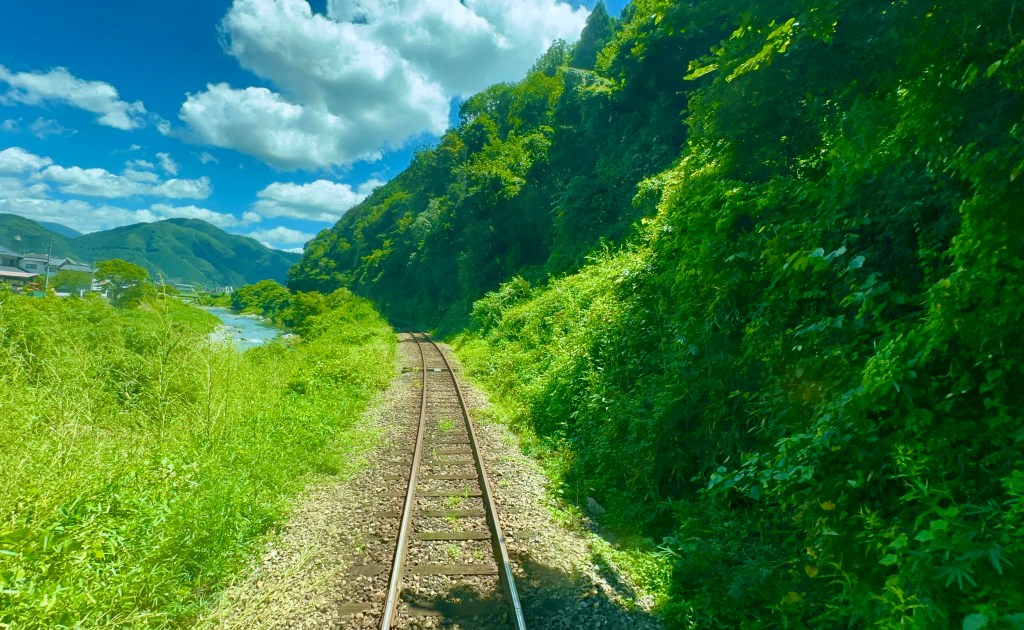
    The lines in the north of Okayama and Hiroshima Prefectures are very local, but wonderful for precisely this reason. I take trips on the Geibi Line, which links Hiroshima and Niimi, in the north of Okayama Prefecture, often, but I don’t get the chance to travel along the Kishin Line, the line east from Niimi to Himeji, so often.

    So, today I decided to take a trip along that line, albeit from Tsuyama (not Himeji) to Niimi.

    (more…)
  • Dreaming of an Engawa

    Whenever I see traditional wooden houses in Japan, I always feel that I would really like a house with an engawa.

    If you don’t know what an engawa is, it’s sort of an outside corridor around a house. It’s still inside the house, and it’s still enclosed. Normally, it’s framed or glazed with glass panels or sliding doors.

    (more…)
  • Japan’s Mandatory Camera Shutter Sound

    Did you know that in Japan, cameras on phones have to have an audible shutter? In other words, when you take a photo in Japan with a smartphone, it goes click, and it’s impossible to mute it, at least not without hacking the phone in some way. In fact, the sound plays even if the phone is in silent or vibration mode.

    Why such an annoying ‘feature’, you might ask.

    (more…)
  • Kii-Kamiya Station

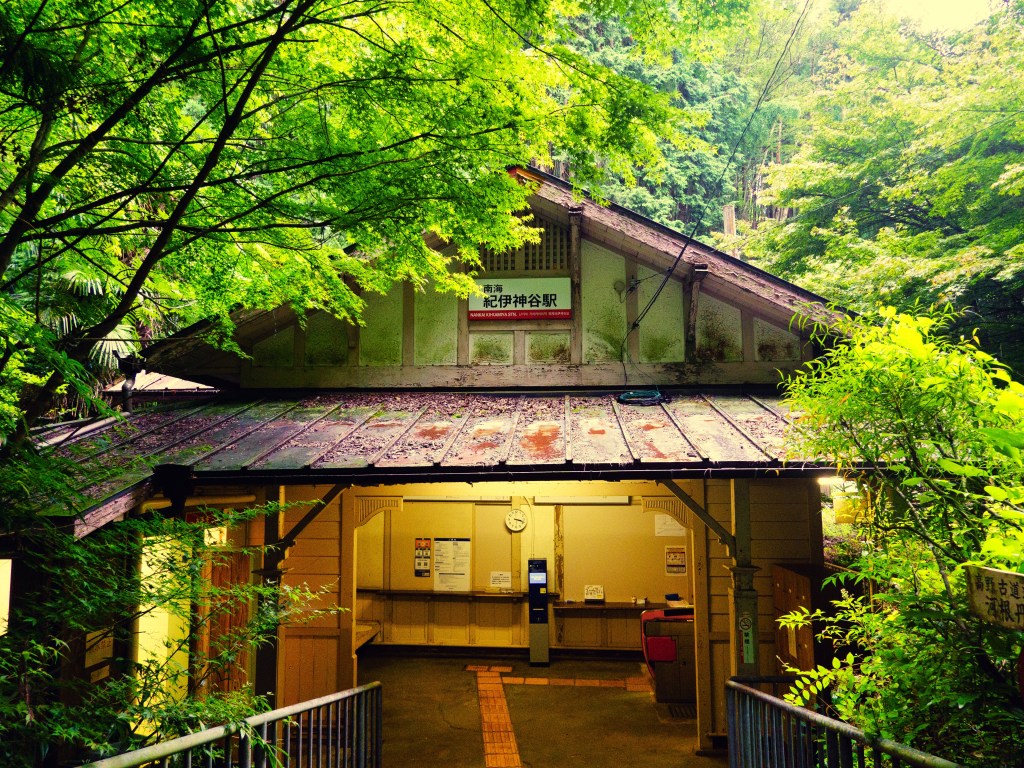
    If you take the Nankai Koya Line, on the long climb from Hashimoto toward Mount Koya, most passengers are focused on the destination, or on the wonderful views from the train windows.

    Few people notice the small stations that slip quietly past the window. One of these stations is Kii-Kamiya Station, just one stop from the end of the line at Gokurakubashi. To be honest, if you blinked, you’d miss it.

    (more…)
  • The Educational Benefit Of Stacking Shelves

    At the supermarket today, I saw a junior high school boy in school uniform, but wearing an apron. He waved to me, so somewhat puzzled, I went over to see who it was. It turned out to be someone I knew and, somewhat incongruously, he was stacking shelves.

    Now, you may well ask why a junior high school boy would be stacking shelves in a supermarket.

    Good question.

    (more…)
  • A Heart of Chocolate

    The saddest thing about Valentine’s Day having passed for another year isn’t the fact that I no longer have females thrusting chocolate at me.

    No, it’s that the big chocolate heart display in the local supermarket has disappeared for another eleven months. Every year it’s a wonder to behold- a huge wall of chocolate, built out of bars of chocolate, with red bars forming a heart. Every day I enjoy seeing it. Or enjoyed seeing it, I should say.

    Maybe they could do a blue heart for White Day, and extend my pleasure for a month or so more?

  • TKG

    ,

    Earlier today on the train, I heard two boys who looked to be of about junior high school age talking about TKG.

    So what, you might ask, is TKG?

    Well, it’s tamago-kake gohan, the T being tamago, K, kake, and G, gohan, which basically means ‘raw egg on rice’. It’s a Japanese dish eaten primarily for breakfast, and it is literally, as the name suggests, raw egg broken over hot rice, and quite often seasoned with soy sauce. It’s a great breakfast actually, and well worth a try if you ever get the chance. And if you get the chance to slip ‘TKG’ into a conversation while you’re in Japan, well, all the better!

  • Question: What is ‘Chappie’?

    Chappie is the Japanese nickname for the AI conversational service ChatGPT, created by adding the casual, affectionate ‘-pie’ to ‘chat’, effectively anthropomorphising the service. Calling ChatGPT ‘Chappie’ makes it seem cute, less a tool and more something (someone?) to have a conversation with or ask advice from.

    The name ‘Chappie’ is also an example of the cultural tendency in Japan to make things ‘cute’. Seen dispassionately, ChatGPT is nothing more than silicon, software, but the name makes it feel almost like a partner or a friend.

    In 2025, the nickname was even nominated for the ‘Buzzword of the Year’ award.

  • Blood For Rice, Or Rice For Blood

    ,

    Today is National Foundation Day (Kenkoku Kinen no Hi), a national holiday in Japan. It marks the founding of Japan and encourages people to reflect on the nation’s history and identity. The date of February 11 is traditionally linked to the legendary ascension of Emperor Jimmu, which is said to have occurred in 660 BC.

    Anyway, for most people in Japan, the day is just a day off. And as such, outside the supermarket today, there was a blood collection drive.

    (more…)